At the heart of the Covecta platform is our agentic workflow engine. This core component is responsible for running tailored business processes in a controlled and consistent manner as part of our conversational user experience.
Today we have a library of over fifty use cases, including loan screening, reconciliation, covenant testing and financial analysis. The individual workflows processed by the engine are generated using an agentic pipeline that harnesses Large Language Models (LLMs) to automate and accelerate the entire lifecycle. We call this pipeline the agent factory.
The process starts with a member of our AI Evangelist team feeding in client requirements and reference documents, such as lending policies, process manuals and sample outputs. LLMs excel at processing unstructured data, which means we can use whatever format of information is available and there is no need for any pre-processing or encoding. Spreadsheets, Word documents, meeting transcripts and emails all go into the hopper. Once the inputs have been provided and any queries clarified with the user, the agent factory begins designing the workflow under the direction of the AI Evangelist, combining the requirements with a comprehensive knowledge base of best practice and recommended workflow patterns.
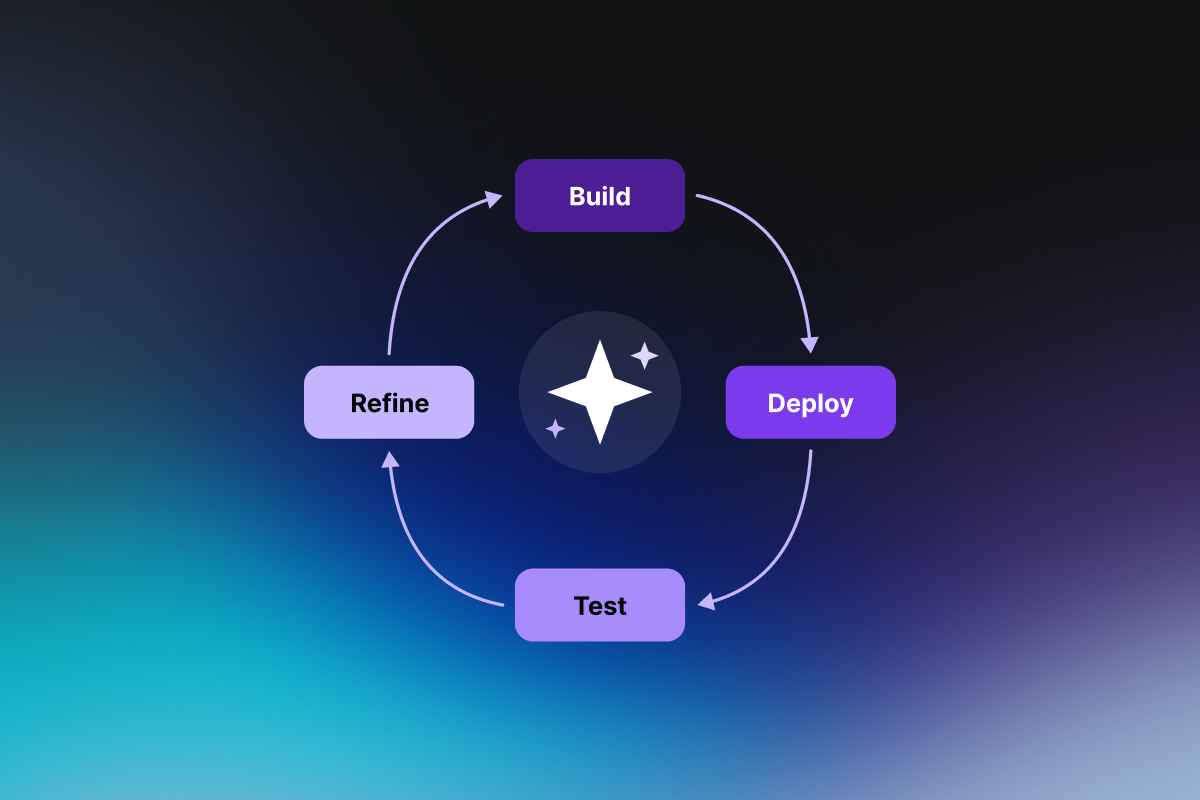
The resulting workflow sets out the specific arrangement of supervisor agent, sub-agents, judges and tools needed to carry out the business process and generate the required output as quickly and efficiently as possible. Once built, the workflow is automatically published into a test environment and executed using a set of synthetic input files designed to exercise all parts of the workflow's logic.
As the workflow runs, the agent factory remotely monitors progress, extracts the output for review once execution completes, and applies knowledge and automation to remove mundane manual activity from the workflow development lifecycle. Any areas for improvement are automatically identified, and if refinement is needed a new version of the workflow is generated and re-deployed for another round of testing. Throughout this process, the AI Evangelist remains in command, providing direction, reviewing outputs and determining when the workflow is ready.
The agent factory executes the repetitive heavy lifting; it does not replace human judgement or control. By adopting a fully agentic approach to the workflow lifecycle, we are able to maximise productivity for the AI Evangelist team, eliminate unnecessary manual activity and ensure consistently high-quality output with meticulous attention to detail, testing and version control.
It is no coincidence that these are the exact same measures of success that our customers see after deploying the agentic workflow engine into their front-line teams.